Inspirational Quotes Coloring Book
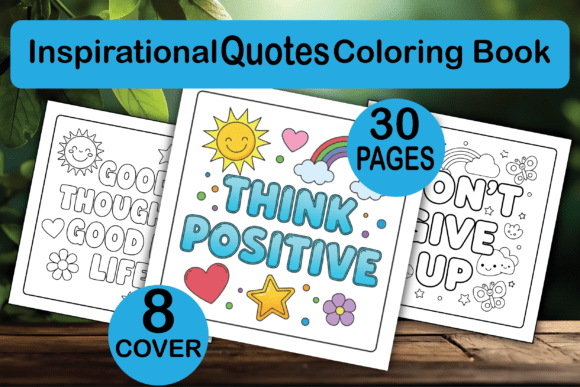
As a designer who’s stitched over 200 custom embroidery projects—from boutique baby onesies to limited-run tote collections—I opened the Inspirational Quotes Coloring Book expecting clean, scalable line art. What I found was something more nuanced: a set of 30 hand-drawn-style quotes that read like gentle affirmations on paper—but need thoughtful translation into thread.
Let’s say you’re prepping for a small-batch launch: embroidered linen tea towels for a local kitchen shop. You pick “Breathe Deeply” from the Inspirational Quotes Coloring Book, resize it to fit a 4×4 hoop, and run a test stitch on scrap fabric. Right away, you notice the delicate line weight—soft, slightly uneven, with intentional tapering at stroke ends. That charm works beautifully in coloring pages. But in embroidery? It demands precision. Thin strokes under 0.8 mm won’t hold up cleanly in satin or fill stitch without careful digitizing adjustments—or a skilled digitizer’s touch.
This isn’t a plug-and-play machine embroidery design. It’s a graphics collection—meant first as printable coloring pages, then adapted. So if you’re an Etsy seller stitching personalized sweatshirts or an apparel decorator adding quotes to organic cotton caps, treat each quote as raw design material—not a finished embroidery file. You’ll need to assess spacing, letter height, curve integrity, and negative space before sending anything to your machine.
The mood is warm, grounded, and quietly confident—think sage green aprons, oatmeal baby blankets, or neutral-toned nursery pillows. These quotes avoid trend-chasing clichés (“Good Vibes Only”) in favor of sincerity: “You Are Enough,” “Tend Your Light,” “Still Here, Still Growing.” That authenticity resonates with customers buying handmade products for meaningful moments—baby showers, teacher gifts, grief support bundles, or self-care kits. But that same subtlety means they won’t pop on busy fabrics or compete with bold logos. They belong where quiet intention matters.
In real embroidery use, the Inspirational Quotes Coloring Book shines brightest on stable, medium-weight fabrics: linen, quilting cotton, midweight denim, or brushed poly-cotton blends. On a structured tote bag? Yes—especially when paired with a simple border or subtle botanical motif. On a stretchy jersey baby onesie? Proceed with caution. Those fine interior curves and tight letter spacing compress unpredictably. Same goes for curved surfaces like caps: small quotes may distort unless re-digitized with proper underlay and pull compensation.
Dark fabric is another consideration. The original line art assumes light backgrounds—so if you’re embroidering “Rise With Kindness” onto a charcoal sweatshirt, test thread color contrast early. A soft ecru or oatmeal thread might vanish; a muted terracotta or deep olive could anchor it beautifully. Always mock up in black and white first—you’ll spot legibility gaps faster than in full-color previews.
Stitch density matters too. These quotes weren’t built for dense fill areas. Over-stuffing a word like “Gentle” with heavy satin stitch risks puckering on thin fabric or obscuring the delicate rhythm of the letterforms. For clean results, lean into running stitch outlines or low-density fill with strategic satin accents on key letters (like the curve of the “G” or the dot of the “i”). That preserves personality while keeping the finished product wearable and washable.
Where does it fall short? Tiny hoop sizes—under 3×3 inches—struggle with multi-word quotes. “Hold Space for Joy” becomes cramped and loses breath. Also, layered garments (like reversible pillow covers) or textured fabrics (bouclé, terry cloth, corduroy) swallow fine detail. If your craft business relies on consistent, crisp repeats—say, for holiday gift sets or wholesale apron lines—audit each quote individually. Some work perfectly as standalone single-line monograms (“Brave,” “Rooted,” “Present”). Others need simplification before becoming embroidered patches or iron-on transfers.
Customer trust builds not just from pretty fonts—but from how well the finished product holds up. A customer who buys a personalized tea towel with “Sip Slowly” expects clarity after five washes. If the original line art has overlapping loops or ambiguous joins (like in the lowercase “e” or “a”), those can turn into thread nests or skipped stitches without cleanup. That’s not a flaw in the Inspirational Quotes Coloring Book—it’s a reminder that coloring page graphics and embroidery-ready files serve different functional needs.
For small shop owners and creative entrepreneurs, this collection is strongest as a *starting point*—not an endpoint. Use it to spark seasonal collections: pair “Winter Rest” with minimalist pine motifs for holiday embroidery; adapt “New Beginnings” into a clean script for baby embroidery kits; or extract single words (“Calm,” “True,” “Here”) for minimalist cap designs. Its value lies in voice, not vector perfection.
Before stitching your first client piece, do these six things:
- Test the design on scrap fabric matching your final product’s weight and weave
- Check thread color contrast on both light and dark fabric swatches
- Review stitch density—reduce fill % if the design feels heavy or stiff
- Confirm your hoop size accommodates the quote comfortably, with ¼" margin
- Inspect small details—dots, crossbars, interior counters—under magnification
- Verify licensing terms: this is a digital printable for KDP, POD, and commercial use, but confirm whether resale of *embroidered finished products* is permitted without modification
The Inspirational Quotes Coloring Book won’t replace your go-to script fonts for high-volume custom apparel. But for makers who value emotional resonance over flash—and who understand that great embroidery starts with intentional design choices—it’s a quietly powerful resource. It invites slowness, care, and clarity—qualities that show up not just in the thread, but in how your customers feel holding the finished product.
So yes—use it. Just use it thoughtfully. Stitch it with purpose. And let the words breathe.