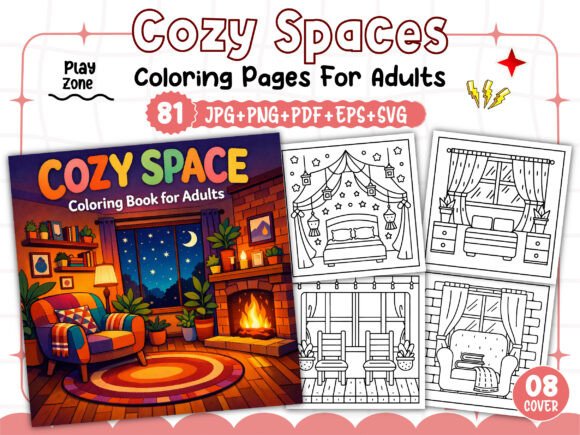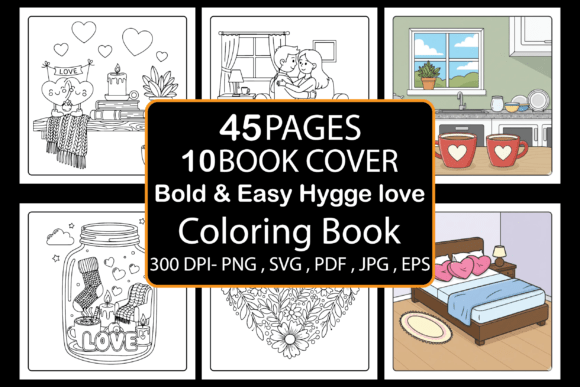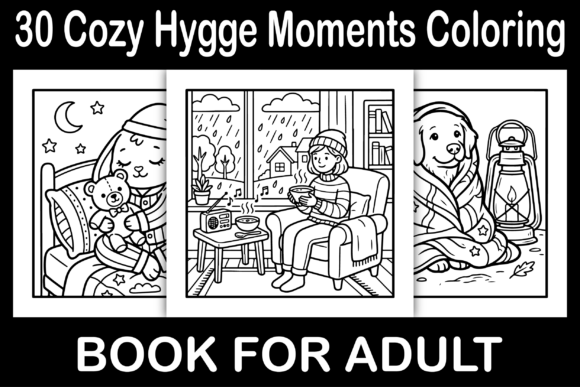
Cozy Hygge Moments Coloring Book
A Designer’s First Glance: Warmth, Simplicity, and Stitch-Ready Potential
When I opened Cozy Hygge Moments Coloring Book, my eye didn’t go to the title first—it landed on the quiet confidence of the line work. Soft curves, generous negative space, and gentle organic shapes immediately signaled something different from typical coloring-page clutter. This isn’t busy filler; it’s intentional breathing room—exactly what makes a design translate well into embroidery. As an embroidery designer who’s stitched everything from nursery wall hangings to boutique aprons, I appreciate how rare it is to find a coloring-style graphic that doesn’t collapse under thread weight or vanish in satin stitch.
Real Project Test: A Hand-Embroidered Linen Tea Towel for a Local Kitchen Boutique
Last week, I prepped a small-batch run of linen tea towels for a downtown kitchen shop—think handmade ceramics, oat-milk lattes, and thoughtful gifting. I chose one motif from Cozy Hygge Moments Coloring Book: a simple mug cradled in two hands, with steam curling upward like a sigh. No text. No dense florals. Just clean, confident outlines and subtle interior detail—just enough to read as “hygge” without needing explanation.
Here’s what happened when I digitized it for machine embroidery (using a 4-inch hoop):
- The open-line nature meant I could easily convert key strokes to running stitch for texture, while keeping the mug’s rim as a smooth satin stitch border—no jagged edges, no lost definition.
- The moderate scale worked perfectly centered on a standard 18" x 28" towel—visible at arm’s length but not overwhelming.
- Because the original lines weren’t ultra-thin or overly delicate, they held up beautifully on medium-weight linen—even without heavy stabilizer. No puckering. No thread breakage.
Where It Shines—and Where You’ll Want to Pause
Cozy Hygge Moments Coloring Book excels in projects where warmth, authenticity, and tactile charm matter more than flash. Think:
- Sweatshirt embroidery: The soft contours soften the stiffness of fleece—ideal for cozy seasonal drops.
- Embroidered patches: Clean outlines digitize cleanly into applique designs or standalone iron-ons.
- Baby embroidery: Gentle motifs (like a sleeping fox or steaming teapot) avoid overstimulation—perfect for onesies or muslin blankets.
- Personalized gifts: Pair a single motif with a name or date in minimalist script—no visual competition.
- Craft fair merchandise: Stitches read clearly from three feet away, and the mood invites conversation (“Oh—this is *so* us.”).
But be mindful: this isn’t a one-size-fits-all file. Its strength lies in restraint—so it won’t carry dense fill-stitch areas, tiny lettering, or complex layering. Avoid using it for:
- Small hoop sizes (<3 inches) unless you simplify further—some motifs need breathing room.
- Highly textured fabrics (like bouclé or thick terry) where fine interior lines may disappear.
- Dark fabric without testing contrast—light-colored thread on charcoal linen needs extra density or a subtle underlay.
- Curved surfaces like caps—simplify or reposition motifs to avoid distortion at the crown seam.
What It Adds to Your Finished Product—Beyond Aesthetics
Using Cozy Hygge Moments Coloring Book does more than fill space—it shifts perception. Customers don’t just see “a mug.” They feel pause. Intention. Care. That translates directly to perceived value: a $28 embroidered tote feels like a curated object, not a generic craft item. For Etsy sellers and small shop owners, that emotional resonance builds trust faster than any product description.
I’ve watched buyers linger longer on listings featuring these motifs—especially when styled with natural light and neutral backdrops. The simplicity reads as premium, even when stitched on midweight cotton. And because the style avoids trend-driven clichés (no glitter fonts, no overused mandalas), it supports long-term brand consistency across seasons.
Practical Notes Every Embroidery Designer Should Run Through
Before stitching your first piece—or listing your first digital embroidery file based on Cozy Hygge Moments Coloring Book, do these five things:
- Test on scrap fabric—not just the same fiber, but the same weight and finish you’ll use commercially.
- Check thread color contrast in both natural and artificial light. What reads softly in daylight can fade on screen or in store lighting.
- Review stitch density. Coloring-book outlines often digitize with lighter underlay—add stability if stitching on stretchy knits or lightweight tees.
- Confirm hoop size compatibility—especially if adapting for commercial multi-head machines or home embroidery units with tight throat space.
- Inspect small details in black-and-white mockups. Does the steam curl still read? Does the mug handle hold its shape? If not, simplify before digitizing.
And always—always—verify licensing terms. Since Cozy Hygge Moments Coloring Book is categorized as Graphics and Coloring Pages, confirm whether derivative works (like digitized embroidery files or printed patches) are permitted for commercial resale. When in doubt, reach out to the creator before scaling production.
Final Thought: Not Just a Design—A Design Mindset
Cozy Hygge Moments Coloring Book isn’t about filling blank space. It’s about honoring slowness in a fast-moving craft economy. As a designer, I reach for it when I want embroidery to feel human—not perfect, but present. Whether you’re stitching a holiday gift for a new parent, building a cohesive line of boutique kitchen textiles, or creating printable mockups for your next Etsy launch, this collection offers clarity without coldness. It leaves room—for thread, for fabric, for meaning. And in embroidery, that space is where the magic actually lives.