Flowers Zentangle Coloring Pages
A Designer’s First Glance: Delicate, Meditative, and Surprisingly Versatile
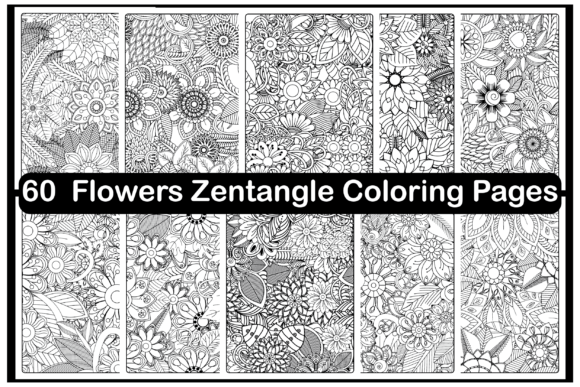
When I opened Flowers Zentangle Coloring Pages, my instinct wasn’t to print it — it was to hold it up to the light, squint at the line weight, and imagine how those fine, interwoven floral motifs would translate into thread. As an embroidery designer who’s stitched everything from nursery onesies to boutique aprons, I look for rhythm, breathing room, and stitch-friendly clarity — not just prettiness. These 60 pages deliver a quiet confidence: clean linework, balanced negative space, and botanical forms that feel both structured and organic. It’s not bold or graphic; it’s contemplative. That makes it ideal for products where calm intention matters — think linen tea towels for a slow-living brand, baby blanket corners, or embroidered patches for yoga studios.
Real Project Test: Stitching a Custom Linen Tote Bag
Last week, I prepped a small-batch run of custom linen tote bags for a local herbalist. She wanted something soft but distinctive — no logos, no slogans, just botanical presence. I chose three Flowers Zentangle Coloring Pages motifs (a climbing vine, a centered dahlia, and a clustered wildflower) and digitized them as medium-density fill-stitch designs with subtle satin-stitch outlines. The result? Crisp definition without stiffness. Because the original line art avoids ultra-thin hairlines and overlapping micro-details, the embroidery held its shape beautifully on the slightly nubby linen — no skipped stitches, no thread nesting. Customers commented on how “hand-drawn” and “thoughtful” the stitching looked — exactly the handmade product impression we wanted.
Where It Shines in Embroidery Applications
- Custom apparel: Works especially well on sweatshirts and relaxed-fit tees — the zentangle rhythm softens the formality of machine embroidery, making it feel personal rather than mass-produced.
- Baby embroidery: Gentle scale and non-geometric flow suit onesies and burp cloths; parents respond to the soothing, non-gendered botanical theme.
- Embroidered patch: Clean outlines and moderate detail mean these transfer cleanly to twill or felt backing — great for craft fairs or Etsy patch bundles.
- Tote bag design & kitchen towel: Linen, cotton canvas, and tea towels all handle the moderate stitch density without puckering.
- Holiday embroidery & wedding gifts: Subtle elegance elevates hand-stitched ornaments, napkin sets, or guestbook covers — no loud colors needed.
Where to Proceed With Care
These aren’t high-contrast, bold-outline coloring pages — and that’s their strength *and* their limitation. Before committing to a project, ask yourself:
- Small hoop sizes (under 4”): Some florals include fine inner loops or tightly spaced petals. Zoom in — if you can’t comfortably trace a single petal with your finger on screen, test that motif first on scrap fabric.
- Textured or stretchy fabric: Avoid dense fill areas on jersey or ribbed knits unless you’re using cutaway stabilizer and reducing stitch density manually.
- Dark fabric: The line art is optimized for coloring — meaning thin lines may vanish under dark thread or fabric. Always mock up in black and white first, and consider adding a subtle running-stitch border for definition.
- Curved surfaces (caps, curved pillow covers): Motifs with strong central symmetry (like radial blooms) adapt better than long, linear vines.
- Frequent-wash items (baby clothes, towels): Confirm your digitizing includes secure underlay and lock stitches — the original graphics don’t dictate stitch logic, so this is your responsibility as the embroidery designer.
What It Adds — and Doesn’t Add — to Your Craft Business
Flowers Zentangle Coloring Pages doesn’t shout. It invites. That directly affects customer trust and giftability: buyers perceive thoughtfulness, not trend-chasing. For Etsy sellers and small shop owners, that translates to higher perceived value on handmade product listings — especially when paired with natural fibers and minimalist branding. It also plays well in digital spaces: use one motif as a clean, recognizable logo alternative on printable mockups or social media banners. But be realistic — this isn’t a plug-and-play embroidery file. It’s graphics, not a machine embroidery design. You’ll need to digitize each motif for your specific use case. That means investing time upfront — but also full creative control over stitch type, density, and flow.
Practical Notes Every Embroidery Designer Should Check
- Always test Flowers Zentangle Coloring Pages motifs on scrap fabric matching your final product’s weight and texture.
- Review thread color contrast — especially on mid-tone fabrics where light grays or muted greens can disappear.
- Inspect small details at 200% zoom before digitizing; simplify where needed for stability.
- Confirm licensing terms before selling finished embroidered items or bundling as digital product assets — KDP/POD use is stated, but commercial embroidery resale rights require verification.
- Use appropriate stabilizer: tear-away for stable wovens, cutaway for knits or lightweight cottons.
- Compare how motifs read on light vs. dark backgrounds — some work better inverted or with added outline weight.
- Ask: Does this support my brand voice? If your shop leans bold and graphic, these may feel too quiet — and that’s okay.
Final Thought: A Quiet Asset, Not a Quick Fix
Flowers Zentangle Coloring Pages won’t win awards for flash — but it earns respect for restraint. In a market saturated with oversized florals and trendy lettering, this collection offers grounded, repeatable beauty. It fits seamlessly into thoughtful product lines: a set of embroidered kitchen linens, a curated baby gift box, or a boutique’s signature tote. Just remember — its power lies in how you interpret it, not how it arrives. Treat it like raw material, not a finished embroidery file. Digitize with care. Stitch with intention. And let the quiet complexity of those flowers speak for itself.