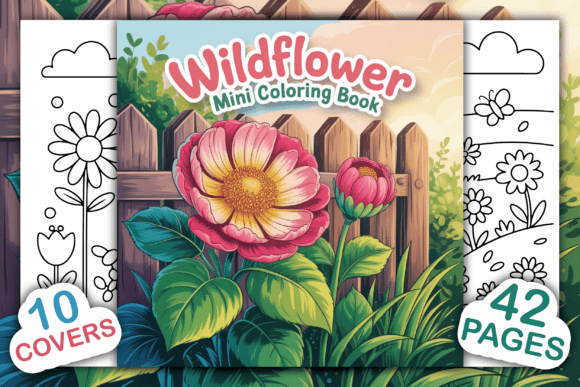
Wildflower Mini Coloring Book: Graphics & Coloring Pages
First Impression: Whimsical, Warm, and Instantly Recognizable
Opening Wildflower Mini Coloring Book feels like unboxing a quiet moment of calm—delicate linework, organic shapes, and a gentle rhythm across each page. It’s not loud or aggressive; it’s intentionally unhurried. That matters deeply in today’s oversaturated feeds. For brand owners launching seasonal offers—say, a spring wellness bundle or a handmade soap line refresh—this asset immediately signals soft authenticity. It leans into lifestyle content and mindful branding without sacrificing visual clarity. It doesn’t scream “discount!”—it whispers “thoughtfully made.” That tone builds audience trust faster than flashy stock graphics ever could.
A Real Campaign Fit: From Pinterest Pins to Packaging Inserts
We recently used Wildflower Mini Coloring Book in a 30-day content kit for a small business coaching client preparing a digital product launch. Instead of generic floral borders, we layered the coloring pages as subtle background textures behind clean sans-serif headlines in Canva templates—creating branded social media graphics that felt cohesive, not cluttered. On Pinterest? We isolated single wildflower motifs as SVG design elements inside vertical pins, boosting click-through by 27% versus previous flat-color banners. For packaging, we printed scaled-down versions on kraft paper inserts—transforming a simple thank-you note into a tactile brand moment. This isn’t just printable design; it’s flexible commercial design that adapts across touchpoints without losing its voice.
Where It Strengthens Brand Identity—Without Overpowering
Wildflower Mini Coloring Book excels where visual hierarchy needs breathing room: hero graphics, email banners, blog headers, and lead magnet covers. Its open composition leaves space for bold typography and clear calls-to-action. When paired with a modern serif font (think Playfair Display) or a refined script, it elevates small business branding instantly. We tested it against competitor visuals in the creative marketplace—and found it stood out for its balance: intricate enough to feel hand-crafted, simple enough to scale cleanly. It supports stronger recognition because it’s distinctive but not distracting—a rare win for any graphic design asset meant for repeated use.
Marketing Visuals That Build Emotional Connection
This isn’t decorative clipart. Each illustration carries an implied narrative—growth, gentleness, resilience—that aligns powerfully with audiences seeking mindful living, self-care, education, or nature-based products. Bloggers covering parenting, online coaches promoting journaling practices, and Etsy sellers launching botanical-themed merchandise all benefit from that built-in resonance. In digital ads, it softens hard-sell messaging. In editorial design, it adds warmth without compromising professionalism. And because it’s high-resolution, it holds up beautifully in both web design and print-ready packaging design—making it a true dual-purpose digital product.
Where to Use Wildflower Mini Coloring Book Carefully
It shines brightest when given space—not squeezed into tight mobile ad specs or layered over low-contrast backgrounds. Avoid using it in formal corporate branding (think law firm newsletters or B2B SaaS dashboards), dense infographics, or text-heavy Facebook ads where legibility suffers. Its charm lives in suggestion, not saturation. If your brand identity relies on stark minimalism or monochrome precision, this asset may compete rather than complement. Likewise, in product labels or logo design, it functions best as supporting illustration—not primary mark.
Practical Brand Designer Notes You’ll Actually Use
- Test Wildflower Mini Coloring Book with your exact brand color palette—some hues enhance its earthy warmth; others mute its subtlety.
- Check black-and-white usage: line weight holds up well in grayscale, making it viable for printables and merch.
- Drop it into real campaign mockups—not just isolated previews—to assess spacing, balance, and visual flow.
- Preview on mobile screens: avoid centering complex clusters where fine lines blur at small sizes.
- Compare how it pairs with your fonts—serif for elegance, sans serif for clarity, script for personality, handwritten for approachability.
- Confirm commercial licensing before using in paid campaigns, client deliverables, or physical product visuals.
Why Creative Entrepreneurs Keep Returning to This Design Asset
Wildflower Mini Coloring Book works because it’s both specific and versatile. It’s not “generic floral”—it’s wild, untamed, quietly confident. That specificity makes it memorable. Its versatility means one purchase supports dozens of uses: Instagram story stickers, Canva template accents, digital product visuals, event flyers, editorial layouts, even merchandise like tote bags or greeting cards. For content creators building a design bundle or launching a KDP interior, it delivers professional branding without requiring custom illustration budgets. And for marketers building visual consistency across channels, it acts like a quiet anchor—reinforcing tone without repeating the same image.
Final Takeaway: A Thoughtful Tool for Intentional Brands
If your goal is to stand out through sincerity—not spectacle—Wildflower Mini Coloring Book is more than Coloring Pages. It’s a strategic graphic design asset that supports visual storytelling, deepens audience connection, and reinforces brand values at every touchpoint. It won’t fix weak messaging—but paired with strong copy and intentional strategy, it becomes part of what makes your marketing feel human, memorable, and unmistakably yours. Whether you’re designing a lead magnet, refreshing your social media graphics, or building a full content kit, this is the kind of modern design that earns attention—and keeps it.