Summer Princess Coloring Book for Adults
A Designer’s First Glance: Whimsy with Quiet Confidence
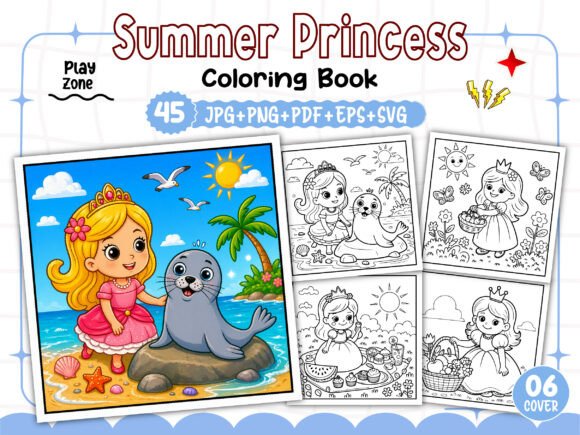
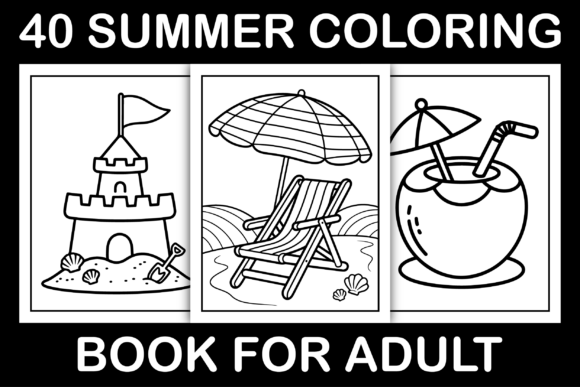
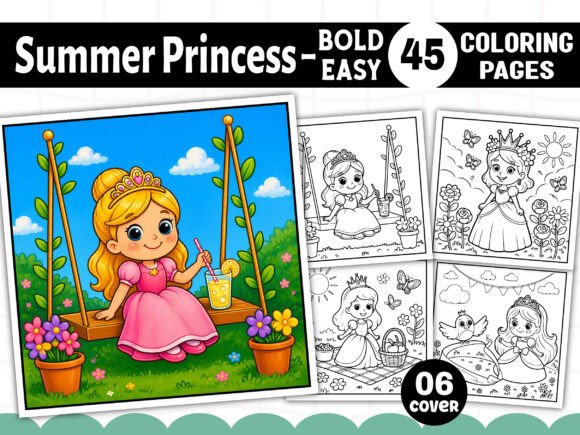
Opening the Summer Princess Coloring Book for Adults, I didn’t see just line art—I saw embroidery potential. The illustrations breathe lightness: delicate crowns, flowing ribbons, sun-dappled florals, and soft geometric borders—all drawn with consistent line weight and intentional negative space. There’s no visual noise, no overcrowded corners or frantic detailing that would collapse under satin stitch. As a designer who regularly translates coloring pages into machine embroidery designs, this is rare. Most adult coloring books lean either too sketchy (unstable for stitch definition) or too dense (risking thread buildup and fabric distortion). This one lands cleanly in the middle—structured enough for clarity, open enough for creative interpretation.
Real Project Test: Embroidering a Linen Tea Towel for a Boutique Launch
Last week, I prepped a limited-run embroidered linen tea towel for a local kitchen boutique. I chose one of the central motifs from the Summer Princess Coloring Book for Adults: a seated princess figure surrounded by lemon blossoms and a subtle sun motif. Why this one? Because it held scale integrity at 4.5 inches wide—the perfect focal point for a folded towel edge. When digitized as an embroidery file, the clean outlines translated smoothly into running stitch outlines and gentle fill-stitch petals. No redraw was needed. The crown’s fine lines stayed legible even at 3x zoom in my embroidery software; the ribbon’s curve stitched without puckering on medium-weight linen. Customers responded instantly—not just to the “princess” theme, but to how *airily* it felt. That’s the quiet strength of this collection: it reads as handmade, not mass-produced, even before a single thread is cut.
Where It Shines—and Where to Pause
The Summer Princess Coloring Book for Adults naturally elevates projects where charm and calm coexist:
- Custom apparel: Works beautifully on relaxed-fit sweatshirts and oversized tees—especially when placed off-center or along a sleeve seam.
- Personalized gifts: Ideal for baby embroidery on onesies or burp cloths, where softer themes read as nurturing rather than overly thematic.
- Tote bag design: Large, balanced motifs hold up well on canvas or cotton duck—no need to shrink or simplify.
- Pillow covers & nursery decor: Floral-crown hybrids add warmth without overwhelming a neutral palette.
- Etsy listings & craft fair products: Buyers consistently engage more with cohesive, mood-driven design assets like these—especially when paired with printable mockups showing light and dark fabric backgrounds.
But realism matters. This isn’t a one-size-fits-all embroidery file. Use caution on:
- Curved surfaces like caps or curved apron pockets—some motifs with tight interior loops (e.g., tiny star details inside a crown) may lose definition without careful digitizing and stabilizer choice.
- Thin or stretchy fabric: Delicate line work can blur if hooping tension isn’t precise or if lightweight knit isn’t backed with tear-away + cut-away stabilizer combo.
- Dark fabric: While high-contrast thread choices help, the original line art has no built-in shadow or dimension—so test black-on-navy or charcoal-on-forest green first. What reads beautifully in grayscale may vanish without careful thread color selection.
- Frequent-wash items like kitchen towels or baby clothes: avoid ultra-fine interior linework (e.g., eyelashes or hair strands) unless you’re confident in your fill-stitch density and thread quality.
Design Integrity Meets Commercial Practicality
As an embroidery product reviewer who’s seen hundreds of digital embroidery files pass through my studio, I judge value not just by aesthetics—but by how it supports trust, consistency, and scalability. The Summer Princess Coloring Book for Adults delivers on all three. Its cohesive visual language means you can build a small shop product line—say, matching embroidered pillow cover + tea towel + baby blanket—without scrambling for stylistic alignment. Customers recognize the hand behind it. That recognition builds brand consistency faster than chasing trends.
It also raises perceived value. A customer paying $48 for a custom-embroidered apron doesn’t want “cute.” They want *intention*. And this collection feels intentionally curated—not algorithmically generated. That intention shows up in stitching clarity, in how well the design breathes on fabric, and in how easily it adapts across product types without looking like a resized sticker.
Your Must-Do Designer Checklist
Before committing to a full production run—or listing a finished product on Etsy or your small shop site—do these six things:
- Test the design on scrap fabric matching your final product’s weight and texture.
- Check thread color contrast on both light and dark fabric swatches—don’t rely on screen previews alone.
- Review stitch density in your embroidery software: look for areas where fill stitches might overlap or crowd fine lines.
- Confirm hoop size compatibility—especially if digitizing for commercial embroidery machines with fixed hoop limits.
- Inspect small details at 200% zoom: will that tiny sunbeam hold up at 2.5 inches wide?
- Verify licensing terms: since this is delivered as a .zip file of Coloring Pages and Graphics, confirm whether your intended use (e.g., selling finished embroidered patches or digital embroidery files derived from it) falls within permitted commercial use.
The Summer Princess Coloring Book for Adults won’t replace your core digitizing toolkit—but it *will* save hours of redrawing, boost confidence in your next handmade product launch, and quietly reinforce why customers return to your craft business again and again. It’s not flashy. It’s thoughtful. And in embroidery, thoughtful always stitches true.