Ramadan Coloring Pages Graphics for Boys 4–8
First Impression: Warm, Playful, and Purposefully Simple
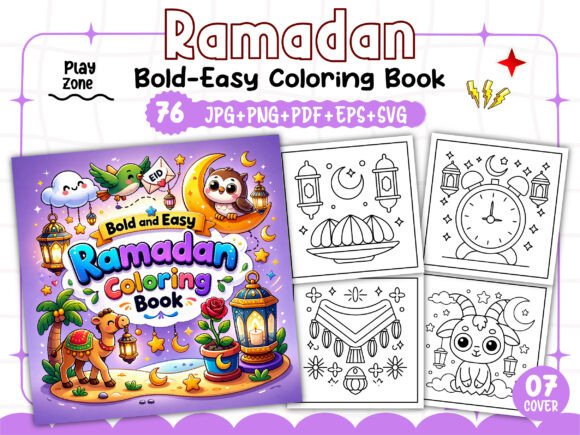
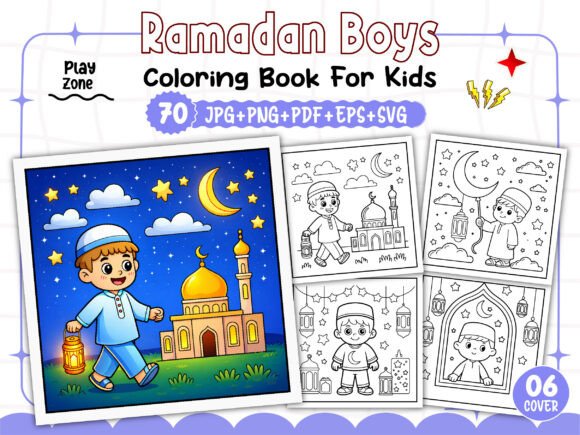
Opening the Ramadan Coloring Book for Boys Ages 4–8, I immediately noticed its intentional balance—friendly line weight, generous negative space, and culturally grounded motifs (mosques, crescent moons, lanterns, dates) rendered with childlike clarity. It doesn’t try to be hyper-detailed or editorially complex. Instead, it leans into a gentle, inviting aesthetic that feels both seasonal and age-appropriate. As a designer evaluating assets for a real client project—a small-batch handmade brand launching a Ramadan-themed subscription box—I appreciated how quickly this set established mood: joyful reverence, not solemn austerity. That emotional tone is rare in religious-themed design assets—and critical when building trust with Muslim families seeking inclusive, uplifting content.
Fits Like a Glove for Seasonal Branding & Printables
This graphic design asset shines brightest in contexts where warmth, accessibility, and cultural resonance matter more than sleek minimalism. For our client’s Etsy shop, we used three pages as base layers for printable wall art, custom greeting cards, and digital activity kits—all paired with soft pastel backgrounds and clean sans-serif typography. The lines hold up beautifully at 12×16" print size and scale down gracefully for 5×7" stickers or Cricut-cut vinyl decals. We also embedded one lantern illustration into a Canva template for social media graphics—paired with warm gold gradients, it became an instant visual anchor for Instagram Stories and Pinterest pins. As a commercial design asset, it supports brand identity without overwhelming it; think product mockups for Ramadan-themed mugs or tote bags where the coloring page becomes a subtle, textured background element—not the hero, but the heartbeat.
Where It Elevates Real Design Work
- Packaging design: Works elegantly as a foil-stamped pattern on kraft gift boxes or as a die-cut window overlay on themed activity kits.
- Print-on-demand: Translates cleanly to sublimation designs for kids’ apparel—especially when simplified further in vector form (more on that below).
- Digital product creation: Serves as foundational artwork for editable PDF coloring books, interactive Canva templates, or printable planners sold on Etsy.
- Community-facing materials: Perfect for mosque event flyers, Islamic school newsletters, or local library Ramadan storytime posters—where familiarity and approachability boost engagement.
- Craft & Cricut projects: The clean outlines and open shapes cut precisely on vinyl and cardstock, making it ideal for layered paper crafts or reusable sticker sheets.
Where Caution Is Warranted
This isn’t a one-size-fits-all SVG design. Its charm lies in its hand-drawn authenticity—but that means it needs thoughtful placement. Avoid using it in minimalist branding systems built around ultra-thin fonts or monochrome palettes; the contrast can feel jarring. It also loses definition at under 0.75" width, so skip tiny logo applications or app icons. In dense layouts—say, a multi-element product label with nutritional facts, QR codes, and certifications—the linework risks visual noise unless isolated with ample breathing room. And while the PNG files render crisply, they’re raster-based: no infinite scalability for large-format banners or embroidered patches without upscaling artifacts.
Designer Notes You Can’t Skip Before Client Use
- Test in black and white first—many clients print internally or use budget printers; verify line consistency and fill readiness.
- Check contrast on both light and dark backgrounds, especially if planning Instagram posts or website banners.
- Preview at actual usage sizes: zoom out to 25% in your layout file to simulate how it reads on mobile feeds or shelf packaging.
- Place on real mockups, not just flat previews—see how the lines interact with fabric texture on a tote bag or gloss finish on a mug.
- Confirm commercial licensing before integrating into an Etsy product, POD listing, or client-branded merchandise—it’s essential for any digital product or printed good sold publicly.
- Inspect PNG transparency: these six files include clean alpha channels, making them drop-ready for layered web design or composite marketing visuals.
- Pair thoughtfully with type: it harmonizes best with rounded sans-serifs (like Quicksand or Nunito) or friendly handwritten fonts—not sharp serifs or condensed display faces.
Final Verdict: A Thoughtful, Niche-Ready Creative Asset
Ramadan Coloring Book for Boys Ages 4–8 isn’t flashy—but it’s reliable, culturally aware, and commercially viable. For designers supporting small business branding, handmade businesses, or faith-based digital sellers, it fills a quiet but meaningful gap: joyful, respectful, age-specific visual language that doesn’t default to cliché. It strengthens visual hierarchy by offering clear focal points without competing with typography. It builds audience engagement through recognizability and emotional resonance—kids see themselves reflected; parents feel seen. And because it arrives as high-resolution PNGs with transparent backgrounds, it slots seamlessly into workflows across Canva, Illustrator, Cricut Design Space, and Adobe Express. Just remember: its power lies in intentionality. Use it where warmth matters, where playfulness aligns with purpose, and where every line invites participation—not passive viewing. That’s how a simple coloring page becomes part of something bigger: a brand’s voice, a community’s celebration, a child’s first creative connection to tradition.